
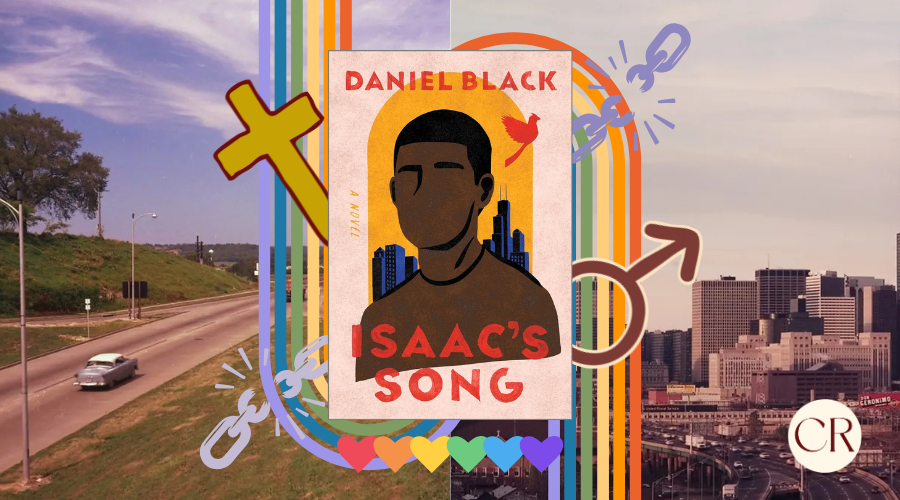
What happens when you’re responsible for mending wounds that were strangely gifted by your own parents? There are few books that sporadically invade my mind after reading, no matter how much time has passed, and Isaac’s Song by Daniel Black is one of them. Granted, it spent a great amount of time getting well acquainted on my TBR (to be read) list. But once I became one with these pages, I found it incredibly hard to put it down. I did not doubt that this book would be a favorite of mine. It forced me to sit and reflect on my own life. Sometimes the closure you seek will look nothing like what you expected.
This story depicts how generational trauma is delivered from one person to the next. Someone is eventually tasked with doing the healing, being subjected to a wearying labor to save themselves. Somehow, it becomes our job to do the work that others neglected, even if there was no ill will on their end. Isaac’s Song explores themes of self-discovery, masculinity, healing, faith, grief, and writing as a tool to uncover truths. Reading this book feels like you, too, are in therapy.

What’s it about?
Isaac is a queer Black man whose upbringing in Missouri conditioned him to water himself down — his feelings, his softness, his artistic creativity, and all else that went against what it meant to be masculine, according to his father’s standards.
His healing begins when he starts writing his story after his estranged father passes, as encouraged by his therapist. He’s now living in Chicago during the late ‘80s and has created a life of his own. His writing transports him back to his childhood, his parents’ upbringing, and the hurt he endured at the hands of his father, and to his surprise, sometimes his mother. He frustratingly discovers that nothing is what he thought it was because your memories and feelings don’t always align.
“The error is to think that revenge participates in healing. It doesn’t. Most of us could’ve been healed years ago—if we’d stopped waiting for a wounded person to do it.”
My review of Isaac’s Song
You know what the most difficult part of healing is? Forgiveness. And if you’ve ever had to forgive your parents, you know what that strain of difficulty feels like. This book is devastatingly beautiful and presents lovely character development. It shows just how complex life is, and the people who are a part of ours are. You’ll find yourself loathing a character, but then growing a heart for them a few chapters later.
One thing I loved about this book was the recognition of the power of words and literature. Isaac often wrote as a child, and college introduced him to the works of W. E. B. Dubois, Zora Neale Hurston, Paule Marshall, Toni Morrison, and Richard Wright. These influential Black writers played a major role in helping Isaac connect with his Blackness and develop a better understanding of his father and why he was who he was. Acknowledging when someone’s actions hurt you is one thing, but it’s a whole different world when you unlock the influences behind their wrongdoings.
This novel has such a soft spot in my heart. It’s a different type of ache when you realize that the way you remembered things can be flawed. Isaac’s therapist was dropping gems left and right. I wanted to literally hug Isaac as he learned, through deconstructing his memories and past conversations, that his perception of some events may not have been the most accurate representation of reality. Readers of Isaac’s Song will witness vulnerability in a rare form that opens their eyes and hearts.
You can read Isaac’s Song as a stand-alone, however I recommend reading Don’t Cry for Me beforehand as it will really help you put everything into perspective. It features the letters that Isaac’s father wrote before he passed — the same letters that Isaac later discovers in Isaac’s Song. It is just as beautifully written and a heart-tugger.